Daily News Roundup: Straits and Strains
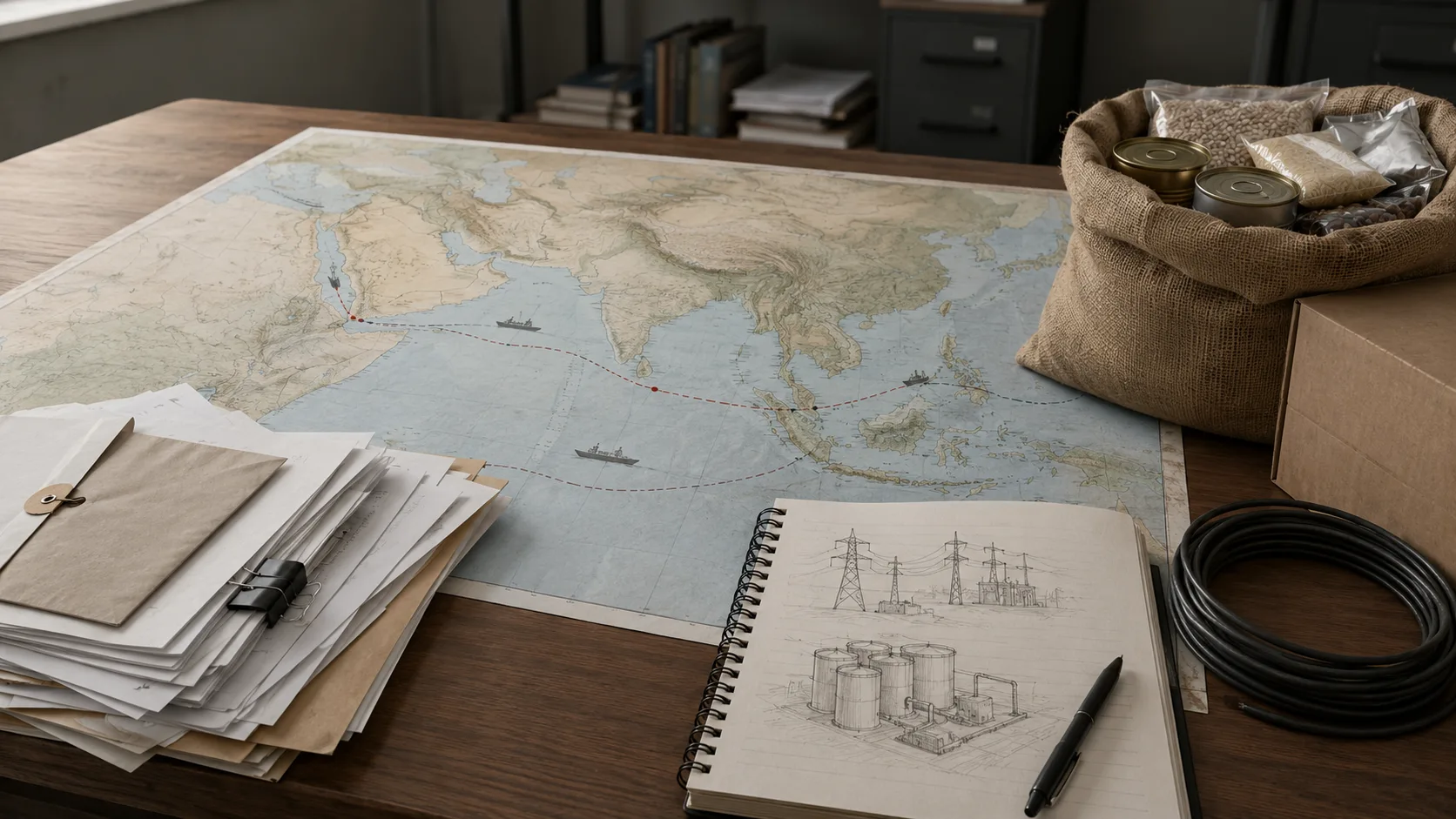
Today's roundup follows U.S.-China tension, Hormuz shipping risk, Britain's Labour rupture, Cuba's blackouts, and Sudan's hunger emergency as systems lose margin for error.
Pressure is building in systems that were already difficult to manage: U.S.-China diplomacy, shipping security near the Strait of Hormuz, a leadership fight inside Britain's governing party, Cuba's power crisis, and Sudan's hunger emergency. The stories are separate, but the pattern is shared. When stress rises, institutions need trust, capacity, and room to respond.
Beijing summit keeps Taiwan at the center
Reuters and AP reported that Xi Jinping warned Donald Trump that mishandling Taiwan could push U.S.-China relations into danger.[R1][R3] China's Foreign Ministry framed the talks around a constructive U.S.-China relationship and "strategic stability," while keeping Taiwan central to Beijing's message.[R2]
The meeting was not just a diplomatic photo opportunity. Taiwan, trade, energy, and spillover from conflict involving Iran all sit inside the same relationship. The cautious reading is that both governments want space to manage friction, but the main flashpoints remain unresolved.
Hormuz risk reaches beyond shipping
The Strait of Hormuz moved back into focus after reports that one vessel was seized off the UAE and another, an Indian cargo ship, sank off Oman after an attack.[R4][R6] Reuters separately reported, citing Fars, that Iran had begun allowing some Chinese vessels to transit the strait under Iranian protocols.[R5]
That detail matters because Hormuz is both a security flashpoint and an energy chokepoint. If access becomes selective, uncertain, or politicized, the effects can travel far beyond the Gulf. The reported Trump-Xi discussion about keeping the strait open shows how quickly maritime risk can become diplomatic risk.[R4]
Britain's Cabinet rupture raises the stakes
In Britain, Wes Streeting resigned as health minister, said he had lost confidence in Prime Minister Keir Starmer's leadership, and called for a leadership contest, according to Reuters.[R7] AP reported that Streeting was the first Cabinet member to resign as Starmer faced pressure after poor local and regional election results.[R8]
This is more than routine party tension. A governing party can absorb criticism, bad polls, and difficult parliamentary arithmetic. A Cabinet resignation tied directly to the prime minister's leadership turns political pressure into a test of authority.
Cuba's blackouts become a wider strain
Cuba's electrical grid suffered a partial collapse affecting eastern provinces, with Reuters reporting protests in Havana after long blackouts.[R9] AP said the failure affected provinces from Guantanamo to Ciego de Avila, while The Guardian reported the energy minister's warning that the island had no fuel oil or diesel reserves.[R10][R11]
The immediate issue is power. The wider issue is how quickly infrastructure stress can become social stress. When blackouts drag on and fuel reserves run thin, households face more than inconvenience. Food storage, transport, work, health care, and public order all become harder to manage.
Sudan's hunger emergency deepens
The Integrated Food Security Phase Classification warned that nearly 19.5 million people in Sudan face high acute food insecurity through May, with about 135,000 people in Phase 5 Catastrophe and 14 areas facing famine risk.[R12] Reuters and AP both reported the assessment, with Reuters also noting access restrictions, insecurity, and budget cuts that constrain aid delivery.[R13][R14]
The numbers are severe, but they should not be treated as abstraction. Food insecurity on this scale pushes families into decisions about movement, debt, health, and survival. It also shows how war damages more than the front line: farms, markets, transport routes, aid access, and public trust all become part of the crisis.
My view
The common thread in these stories is not crisis itself. It is the shrinking margin for error.
A tense summit can still leave the hardest questions unresolved. A shipping lane can appear open until access becomes conditional. A governing party can look stable until a Cabinet resignation changes the test. A power grid can fail in technical terms, then become a public-order problem. A food emergency can be measured in phases and totals, but the real pressure lands in households, markets, and aid routes.
That is why this roundup matters. Each story shows a system under strain, and each system depends on more than formal authority. Diplomacy needs credibility. Shipping needs predictable access. Governments need internal consent. Infrastructure needs reserves. Humanitarian response needs security and funding. When those supports thin out, small shocks stop behaving like isolated events. They start moving through everything connected to them.
References
Sources
-
Trevor Hunnicutt; Mei Mei Chu | Published May 13, 2026 | Accessed May 14, 2026
-
Official readout | Accessed May 14, 2026
-
Will Weissert; Aamer Madhani | Accessed May 14, 2026
-
Reuters | Published May 14, 2026 | Accessed May 14, 2026
-
Reuters | Published May 14, 2026 | Accessed May 14, 2026
-
Adam Schreck; Melanie Lidman | Accessed May 14, 2026
-
Elizabeth Piper; Andrew Macaskill; Alistair Smout | Published May 14, 2026 | Accessed May 14, 2026
-
Brian Melley; AP live file | Accessed May 14, 2026
-
Dave Sherwood | Published May 14, 2026 | Accessed May 14, 2026
-
Andrea Rodriguez | Accessed May 14, 2026
-
Cuba has run out of diesel and fuel oil, energy minister says, as US blockade pushes island to brinkGuardian staff and agencies | Published May 14, 2026 | Accessed May 14, 2026
-
IPC Global Initiative | Accessed May 14, 2026
-
Nafisa Eltahir | Published May 14, 2026 | Accessed May 14, 2026
-
Associated Press | Accessed May 14, 2026
Reader comments
Comments