Daily News Roundup: Systems Under Pressure
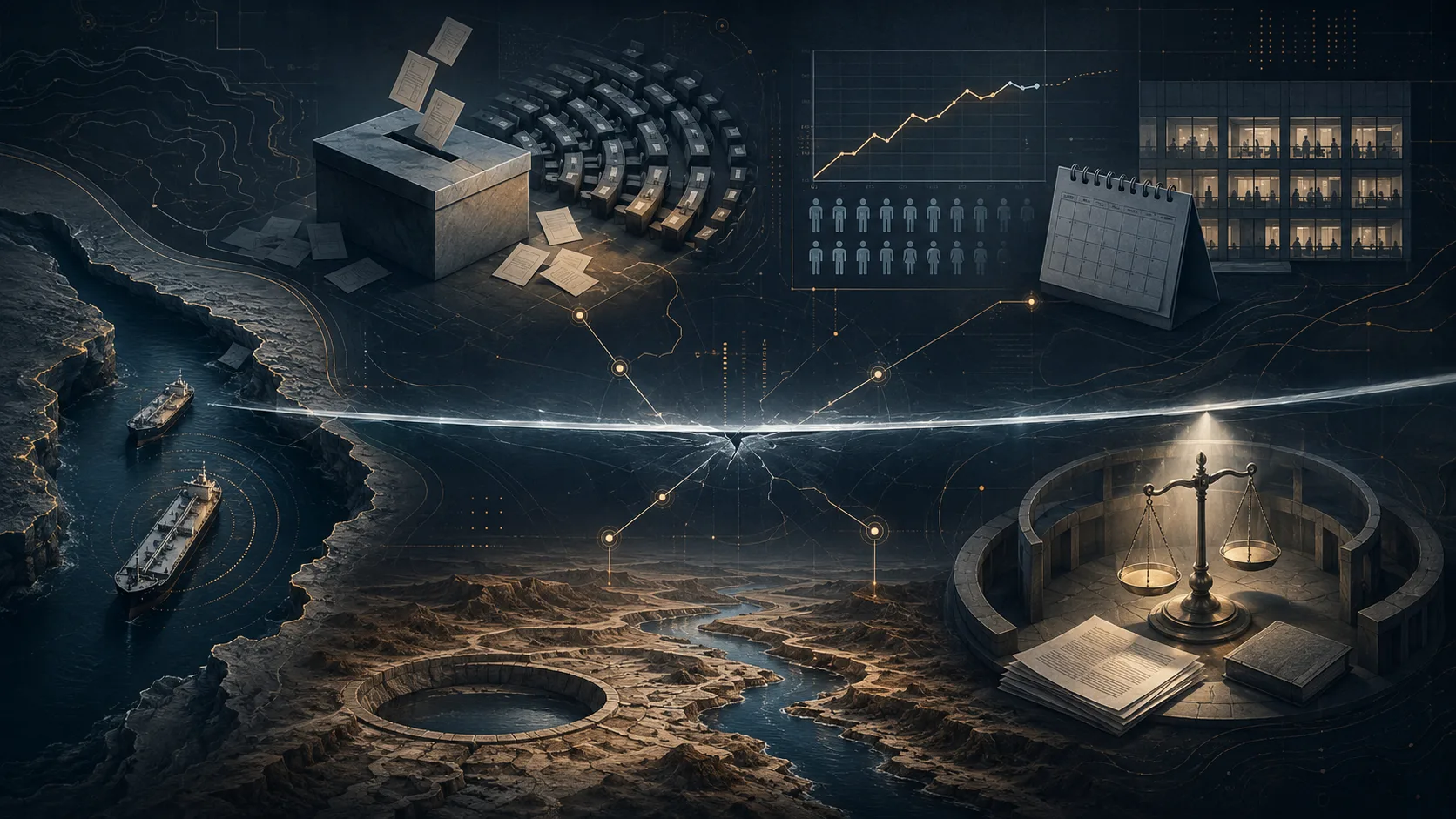
Today's roundup covers renewed Strait of Hormuz risk, UK election pressure, the April U.S. jobs report, South Africa's revived impeachment fight, and weak Colorado River runoff forecasts.
Several major stories on Friday put pressure on systems that often look steadier from a distance: shipping lanes, party politics, labor markets, constitutional checks, and the water supply of the American Southwest.
None of these stories is settled. Each changes the near-term risk picture in a concrete way.
Hormuz sees another dangerous turn
The Strait of Hormuz remained at the center of global risk. U.S. Central Command said American forces disabled two Iranian-flagged vessels, M/T Sea Star III and M/T Sevda, on May 8, after an earlier action against M/T Hasna on May 6. AP reported the development as part of a wider escalation after exchanges of fire involving Iranian forces in and around the strait.[R1][R2]
This is not just a repeat of yesterday’s shipping dispute. The new issue is direct U.S. military action against additional vessels while diplomacy is still trying to reduce tensions. That combination matters because Hormuz is more than a regional flashpoint. It is a chokepoint for trade, energy markets, insurance risk, and military escalation.
UK election results put Starmer under pressure
In the United Kingdom, local and regional election results brought losses for Prime Minister Keir Starmer’s Labour Party and gains for Reform UK. AP reported that Starmer said he would not quit. The Guardian described mounting Labour losses in England and Reform gains in key contests.[R3][R4]
Local elections do not automatically predict a national result, and counts can shift as returns are finalized. Still, the pattern matters. It points to a more fragmented electorate and a Labour government facing pressure less than two years after its general-election victory.
For Starmer, the immediate issue is not only whether he stays in charge. It is whether the government can regain momentum before the losses harden into a larger political story.
The U.S. jobs report sends a resilient but cautious signal
The Bureau of Labor Statistics reported that U.S. employers added 115,000 jobs in April and that the unemployment rate was unchanged at 4.3%. AP described the headline number as stronger than expected despite the economic shock from the Iran war.[R5][R6]
The report gives households, markets, and policymakers a fresh read on whether the economy is bending under geopolitical and policy stress. The headline number points to resilience. The cautious read is that one monthly report cannot settle the question.
Employers, consumers, and the Federal Reserve are all trying to judge whether uncertainty is temporary or starting to change behavior. April’s report helps, but it does not end that debate.
South Africa’s top court revives an accountability fight
South Africa’s Constitutional Court revived the impeachment process tied to President Cyril Ramaphosa and the Phala Phala cash scandal. AP reported that the ruling overturned lawmakers’ earlier decision to reject a report implicating Ramaphosa and opened the way for a possible impeachment process to continue. The Constitutional Court listed the related Economic Freedom Fighters case among its judgments.[R7][R8]
The ruling does not mean Ramaphosa will be removed from office. It does mean a major accountability fight is back in motion in one of Africa’s most important democracies and economies.
The timing matters. South Africa’s politics are already more complicated after the African National Congress lost its parliamentary majority in 2024. A revived impeachment process can now test both the courts and the country’s governing coalition politics.
A weak Colorado River forecast sharpens western water worries
The Colorado River story is slower than the day’s military and election news, but it may matter for longer. NOAA’s Colorado Basin River Forecast Center projected sharply weak Lake Powell runoff in its May water-supply briefing. Arizona Daily Star/Tucson.com reported that runoff into Lake Powell is expected to hit record-low territory after very dry and warm conditions.[R9][R10]
That forecast matters because the Colorado River is infrastructure for daily life across the Southwest. It supports cities, farms, tribes, ecosystems, and hydropower.
A bad runoff year does not decide every future negotiation. It does narrow the room for delay. The river’s long-term problem is not scarcity as an abstract warning. It is the growing need to make real allocation choices before weather and reservoirs make them by default.
My view
Read together, these stories are about strain reaching the places where systems become visible.
Hormuz shows how quickly a shipping dispute can become a military and economic risk. The UK elections show how a governing party can lose political control of the story before it loses formal power. The U.S. jobs report shows an economy still adding workers, but not free from the pressure of war, uncertainty, and policy choices. South Africa’s court ruling shows that constitutional checks matter most when they are inconvenient. The Colorado River forecast shows a slower kind of pressure, where the calendar is measured in runoff seasons instead of news cycles.
The common thread is not crisis in every case. It is reduced margin. When the margin shrinks, every decision carries more weight: a vessel disabled, a local election lost, a jobs number interpreted, a court process reopened, a reservoir forecast revised downward.
That is why these stories belong in the same roundup. They are not the same type of news, but they all point to the same operating reality: systems can absorb stress until they cannot, and the moment to notice is usually before the breaking point becomes obvious.
Reader comments
Comments